




Forest honey: the pure taste of nature straight from the forest
Forest honey, often called honeydew honey, is a distinctive type of honey that differs from traditional blossom honey. It is not made from flower nectar: bees collect honeydew from the leaves and bark of trees.
Honeydew honey is usually collected from oaks, spruce, pine and other forest trees, giving it its dark colour, rich flavour and variety of vitamins. For this reason, forest honey is considered one of the most valuable types of honey, with a high mineral and antioxidant content.
How do bees make forest honey?
Bees collect honeydew, a sweet, sugary liquid secreted by trees during the summer. After bringing the honeydew to the hive, the bees process it with their enzymes, turning it into forest honey.
- Ripening in the hive: bee enzymes give the honey antibacterial and antioxidant properties.
- A seasonal product: honeydew flow depends on the weather, so forest honey is available only in limited amounts.
What makes forest honey unique?
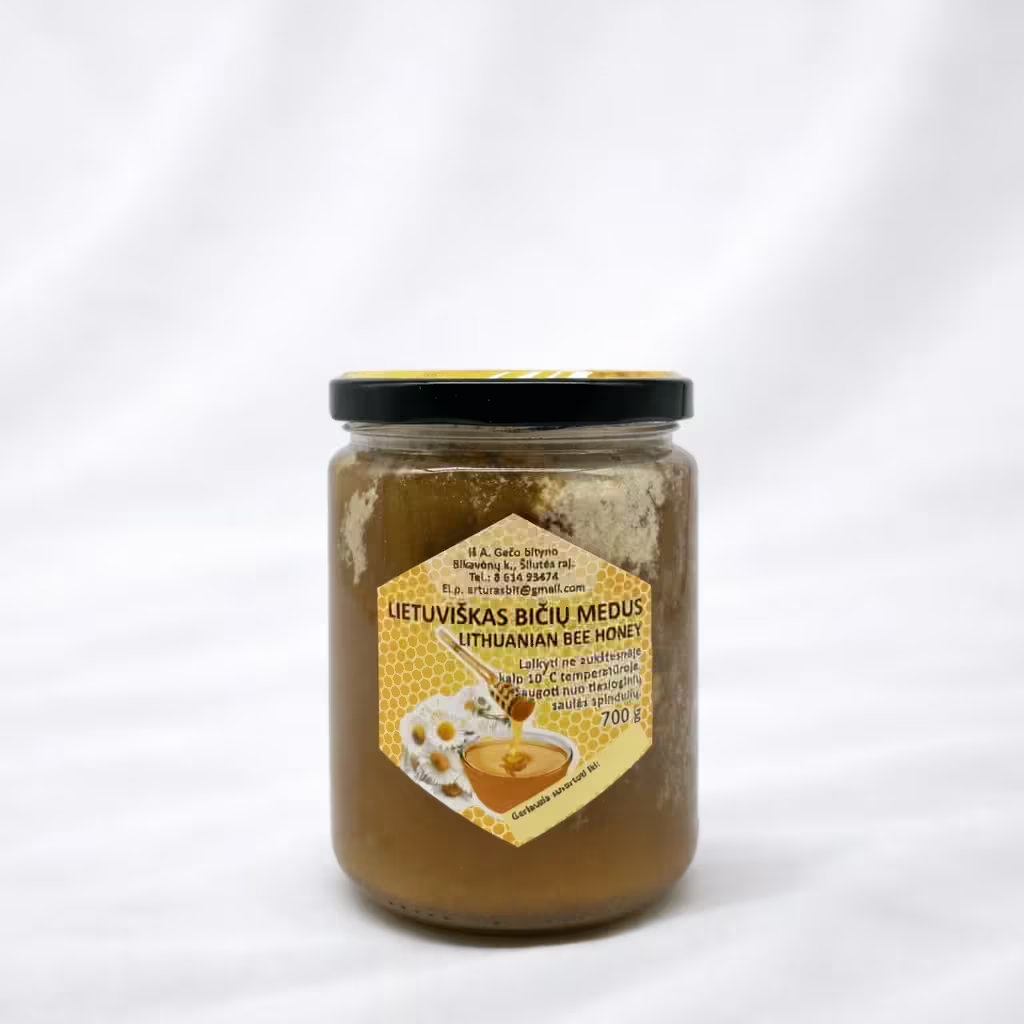
- Colour: from dark brown to amber;
- Consistency: remains liquid for a long time due to its lower glucose and moisture content;
- Aroma: intense, with notes of resin, smoke and wood;
- Flavour: less sweet than blossom honey, but sometimes with pleasant caramel and smoky notes.
Health benefits of honeydew honey
- Rich in minerals – forest honey is rich in calcium, magnesium, potassium, zinc and iron.
- High in antioxidants – helps strengthen the immune system, supports brain activity, promotes healthier skin and more;
- Helps with digestive problems – its natural components support the activity of beneficial bacteria.
How to enjoy forest honey
- For daily consumption – 1-2 teaspoons a day provide energy and strengthen the body;
- With tea – pairs perfectly with herbal teas;
- For breakfast – goes well with porridge, yoghurt and pancakes;
- With cheese and nuts – an excellent addition to snacks.


